Featured
The Truth About Debt Forgiveness for Burdened Americans -...
Understanding Your Mortgage Help for Low-Income Families:...
What to Watch For When Selecting a Bankruptcy Provider fo...
:max_bytes(150000):strip_icc()/debtrestructuring.asp_final-a64fcb2c01704710bc55061e4304ce7d.png)
The 6-Minute Rule for Private Relief Organizations Reviewed
Table of Contents
The firm will pull a credit report to comprehend what you owe and the degree of your hardship. If the mercy program is the finest option, the counselor will send you an arrangement that details the plan, consisting of the amount of the regular monthly repayment.
Once everybody agrees, you begin making regular monthly repayments on a 36-month strategy. When it mores than, the agreed-to amount is removed. There's no fine for paying off the equilibrium early, however no extensions are enabled. If you miss out on a repayment, the arrangement is squashed, and you must exit the program. If you think it's a good choice for you, call a counselor at a nonprofit credit report counseling firm like InCharge Financial debt Solutions, who can address your questions and assist you determine if you certify.
Since the program permits consumers to choose much less than what they owe, the creditors who get involved desire peace of mind that those who benefit from it would certainly not have the ability to pay the total. Your credit scores card accounts additionally have to be from financial institutions and credit card firms that have actually agreed to get involved.
If you miss out on a repayment that's just one missed repayment the arrangement is ended. Your financial institution(s) will certainly cancel the plan and your balance goes back to the original amount, minus what you've paid while in the program.
The Best Strategy To Use For Recovering Your Financial Standing the Smart Way
With the forgiveness program, the lender can instead select to keep your financial debt on the publications and recover 50%-60% of what they are owed. Nonprofit Bank Card Financial debt Forgiveness and for-profit financial obligation negotiation are similar because they both offer a way to resolve credit score card debt by paying less than what is owed.
Charge card mercy is created to set you back the customer less, repay the debt quicker, and have fewer disadvantages than its for-profit equivalent. Some vital areas of difference between Charge card Financial obligation Mercy and for-profit financial obligation settlement are: Bank card Financial debt Mercy programs have connections with financial institutions that have consented to take part.
Once they do, the reward period starts immediately. For-profit financial obligation settlement programs discuss with each lender, typically over a 2-3-year duration, while passion, fees and calls from financial obligation collectors continue. This means a larger appeal your debt record and credit scores rating, and an enhancing balance until settlement is completed.
Credit Scores Card Financial debt Forgiveness clients make 36 equivalent regular monthly payments to remove their financial debt. For-profit debt settlement customers pay into an escrow account over an arrangement period towards a lump amount that will certainly be paid to creditors.
The Buzz on Reviewing APFSC to Find the Best Fit

Throughout this time, fees might boost, and passion accrues, so settlements may wind up not being affordable for customers. Meanwhile, customers stop making payments to their credit card accounts. Calls from financial obligation enthusiasts proceed and creditor-reported non-payments remain to damage the customer's credit scores record. Enrollment in a Bank Card Debt Forgiveness quits calls and letters from debt collection and recovery agencies for the accounts included in the program.
For-profit financial debt settlement programs don't quit collection actions until the lump-sum payment is made to the creditor. Nonprofit Bank Card Financial debt Forgiveness programs will certainly inform you in advance what the monthly charge is, topped at $75, or less, depending upon what state you live in. For-profit financial debt settlement companies might not be clear regarding fee quantities, which often are a percentage of the balance.
Fascination About Creating Your Can You Remove Collections from Your Credit Report Without Paying? : APFSC Strategy
For-profit debt negotiation likely will hurt it more, considering that you won't be paying financial institutions during the 2-3 year negotiation/escrow period, yet they haven't accepted a strategy or obtained any type of money, so they're still reporting nonpayment. This gets on top of the credit rating hit from not paying the total.
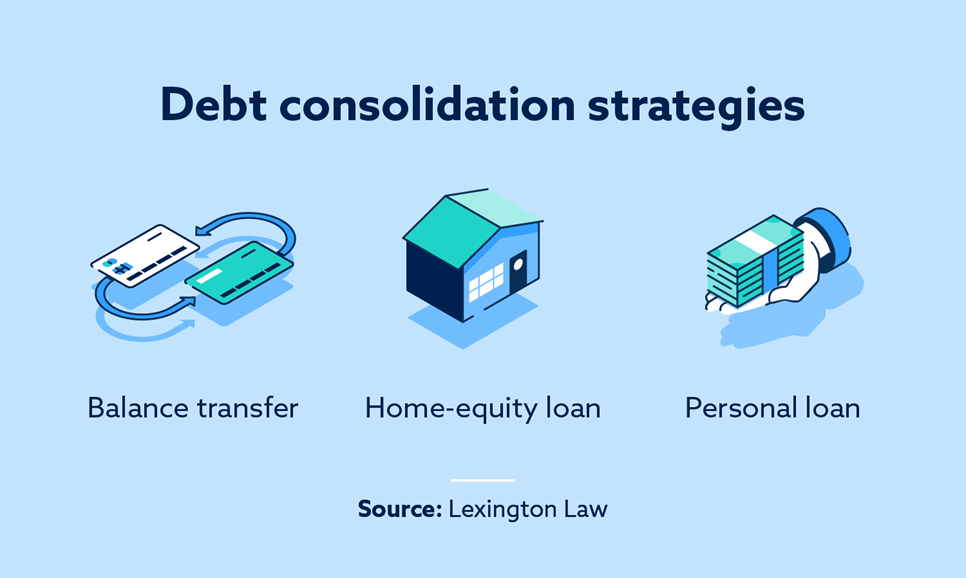
In many cases, financial debt consolidation also features a reduced rate of interest rate than what you were paying on your charge card, making the month-to-month prices, as well as general costs, much less. Charge card debt consolidation's most usual kinds are financial obligation monitoring plans, debt loan consolidation fundings, or a zero-interest transfer charge card.
To get a financial obligation combination finance or a zero-interest balance transfer bank card, you need a credit report of a minimum of 680. Higher. If your accounts are charged off, your credit report rating is likely well below that. Credit scores score isn't an element for financial obligation monitoring program, however you require an adequate income to be able to make a regular monthly repayment that will certainly cover all of the accounts included in the program.
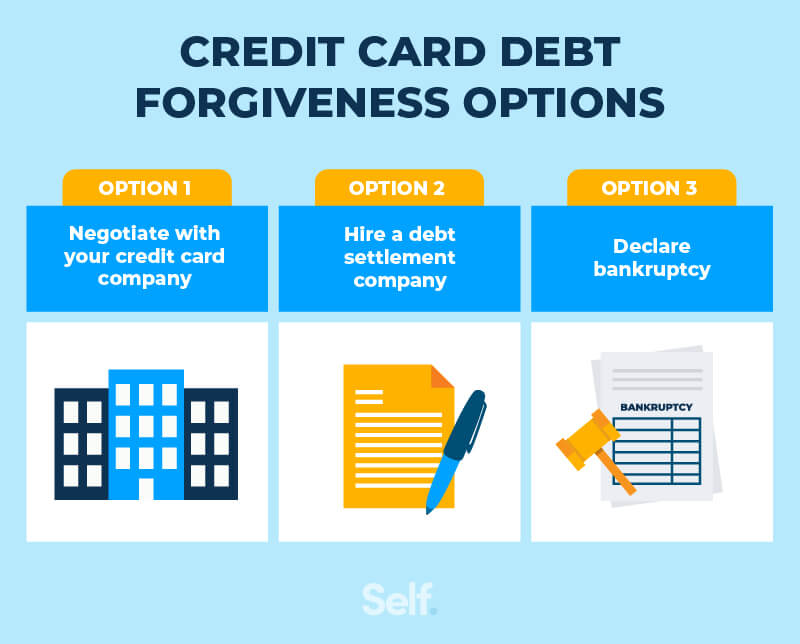
Insolvency is the last resource for someone that has even more financial debt than they can pay. Nonprofit Bank Card Financial debt Mercy will not eliminate nearly as much financial obligation as bankruptcy does, however it likewise has much less of the long-lasting unfavorable economic effect insolvency lugs. It can be the step you take in order to stay clear of bankruptcy.
The 45-Second Trick For Federal Resources That Offer Can You Remove Collections from Your Credit Report Without Paying? : APFSC
Bankruptcy will eliminate all eligible unprotected financial obligation. Credit Scores Card Financial debt Forgiveness will have a negative influence on your debt rating considering that complete equilibriums on accounts were not paid.
Credit Report Card Financial debt Mercy settlements begin as quickly as you're approved right into the program. Collection actions and lawsuits on Credit history Card Debt Mercy customers are quit when financial institutions agree to the plan.

Table of Contents
Latest Posts
The Truth About Debt Forgiveness for Burdened Americans - An Overview
Understanding Your Mortgage Help for Low-Income Families: What Options Do You Really Have? : APFSC Options and Requirements Fundamentals Explained

The Basic Principles Of Your Interests
More
Latest Posts
The Truth About Debt Forgiveness for Burdened Americans - An Overview
The Basic Principles Of Your Interests